Matcha and coffee are easier to compare when you name the actual drinks. A small homemade matcha, a large sweetened matcha latte and a mug of brewed coffee have different recipes. Start with three details: the product, the amount used and the finished serving size.
This guide explains how to read caffeine figures and compare ingredients without treating every green drink or every coffee as the same product.
Start with the recipe and serving size
For matcha, write down whether you are using plain green-tea powder or a prepared latte mix. For coffee, record the preparation shown on the menu or packaging. “One cup” is an incomplete description when the cups, recipes or product amounts differ.
| What to record | Matcha drink | Coffee drink |
|---|---|---|
| Product | Plain matcha powder or named mix | Named coffee product and preparation |
| Recipe amount | Grams of powder actually used | Recipe details supplied by the maker |
| Finished drink | Cup size and liquid volume | Cup size and liquid volume |
| Additions | Milk, sweetener, syrup or other ingredients | Milk, sweetener, syrup or other ingredients |
Keep the comparison consistent. If you usually order a milk drink, record that order rather than borrowing the figures for a plain drink. A photograph of the menu description and a note of your chosen size can make later comparisons easier.
Read caffeine figures with their units
The FDA’s caffeine guide lists a typical range of 113–247 mg for 12 US fluid ounces of regular brewed, non-specialty coffee—about 355 mL. That reference does not identify the caffeine in a particular café order.
Matcha research often reports a different unit. In Meyer and colleagues’ 2023 laboratory study, the average caffeine concentrations for ten matcha products ranged from 17.74 to 35.01 mg per gram of tea in Table 2. The researchers analysed extracts; these figures are product-sample measurements, not a survey of finished café drinks.
Worked arithmetic example: multiplying those sample means by an illustrative 2 g of powder gives about 35–70 mg. The 2 g amount is a calculation example, not a recommended serving. It cannot establish the measured caffeine content of your own powder, recipe or drink.
When a comparison gives a caffeine number, look for the words after it: per gram, per serving, per container or per specified drink volume. Keep those words with the number when you write it down.
Check milk, mixes and added ingredients separately
A drink’s name does not list its full recipe. Read the ingredients of a packaged mix and the description of a café drink. Note the milk or alternative, whether the mix already contains sweetener, and any syrup or topping added to your order.
If you are comparing nutrition information, use the values for the complete recipe and the same stated basis. A label for dry powder, a menu entry for a prepared latte and a figure for plain coffee describe different things. Avoid assembling a total from unrelated products.
A five-step comparison you can use
- Name both orders. Write the product or café item, preparation and selected size.
- Record the recipe. For homemade matcha, note the grams used. For a prepared drink, keep the maker’s recipe information where available.
- Copy the caffeine basis. Keep the amount, unit and serving description together. Ask the maker when the amount is unclear.
- List additions. Include the milk, mix, syrup and topping in each version.
- Keep gaps visible. Write “not provided” instead of substituting an unrelated tea average or an assumed café value.
This simple record is useful when you change a product or order. Update the entry when the size or recipe changes. It also helps separate a preference about ingredients or preparation from a question about caffeine amount.
Common questions
Does matcha contain caffeine?
Yes. The matcha products measured in the study above contained caffeine. Use information for the specific product and recipe when it is available.
Does adding more water reveal the caffeine amount?
The finished volume alone cannot tell you how much powder was used or establish a tested caffeine value. Record both the recipe amount and the final serving size.
Can I use a general green-tea figure for a matcha latte?
Check the product description first. A tea-bag drink, plain matcha powder and a prepared latte mix are different products. Keep the reference attached to the product it describes.
Which should I choose?
Choose the question you want to answer—ingredients, preparation, taste or available caffeine information—then compare your actual options. For individual caffeine questions, a qualified healthcare professional can advise in the context of your circumstances.
For food-planning ideas alongside your usual drinks, explore our practical meal-prep workflow and vegetarian protein-food comparison.
Sources
- US Food and Drug Administration: caffeine content and product variation.
- Meyer and colleagues, 2023: commercially available green teas, Table 2, Plant Foods for Human Nutrition. Article examples and arithmetic above are editorial explanations of the reported measurements.
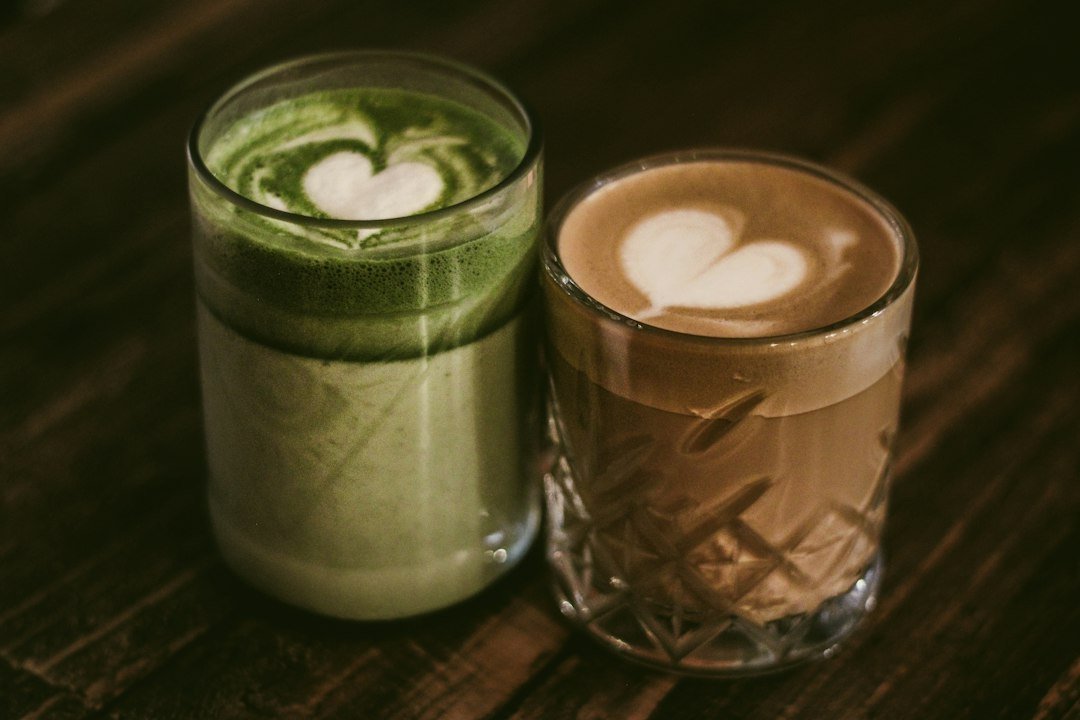
Editorial photograph: Nastia Petruk on Unsplash. The photograph illustrates drink styles and does not represent a tested caffeine serving.