
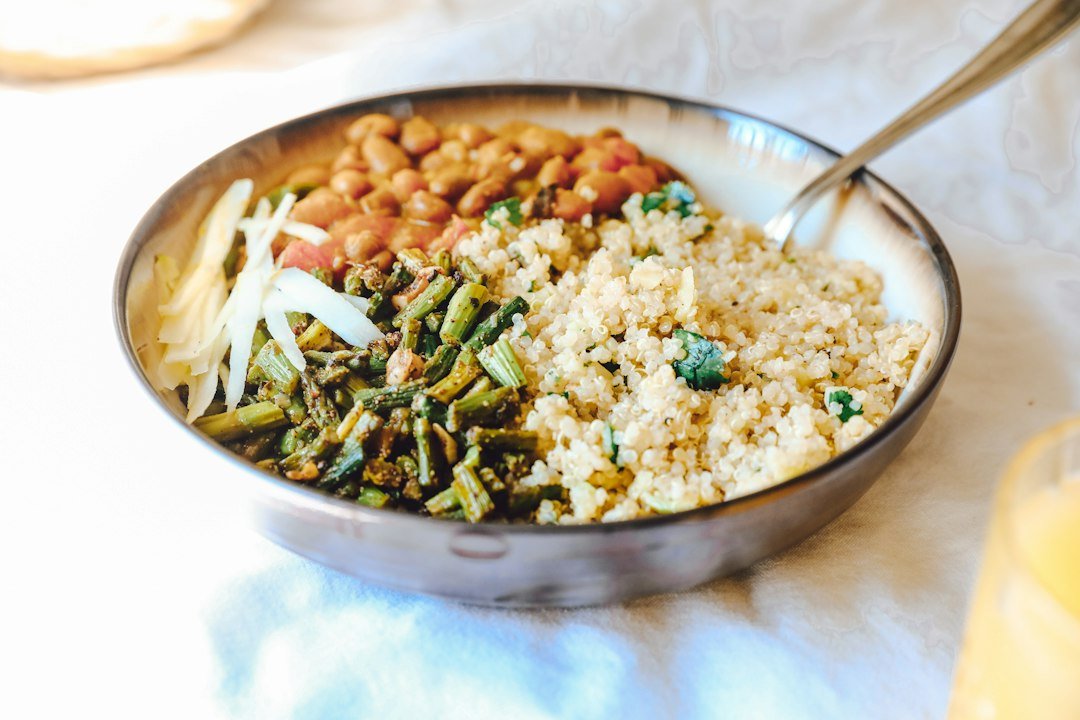
A home-workout meal plan is easier to use when it fits the rest of your day. Start with the time you expect to exercise, the meals you already eat and the ingredients you can prepare. This guide offers Indian food ideas and a planning method for adults doing everyday home exercise. The examples are meal combinations, with no fixed calorie, portion or protein prescription.
Start with your usual food pattern
The NHS describes a balanced diet as a variety of foods across the main food groups. These include starchy foods, fruit and vegetables, protein foods, and dairy or suitable alternatives. The balance can be considered across the day or week, rather than forcing every plate to look identical. [1]
For an Indian kitchen, a useful planning checklist is:
- A starchy food: rice, roti, oats, potatoes, idli or another familiar choice.
- A protein food: dal, chana, rajma, tofu, eggs, fish or chicken. Dairy foods can also be included if suitable for you.
- Vegetables or fruit: use produce you enjoy and can obtain consistently.
- A practical way to prepare it: a quick fresh meal, a safely refrigerated component or a frozen portion.
These are building blocks for choosing food. The amount that suits you depends on your overall needs, activity, appetite, preferences and any dietary restrictions.
Choose a meal schedule you can use
Write down when your session will happen and when you last ate. A small, familiar snack may be useful when you need something before exercise; eating a large meal very close to a session can be uncomfortable. Government exercise guidance discusses carbohydrate-containing foods before activity and carbohydrate and protein foods afterwards. The timing and amount need to fit the person and the session. [2]
| Your routine | Planning decision | An example to adapt | Prepare in advance |
|---|---|---|---|
| Early morning | Decide whether you want a familiar light snack first and when breakfast will be ready. | A banana or toast if wanted before the session; then your usual breakfast, such as vegetable poha with plain curd. | Keep fruit available and measure or wash the breakfast ingredients. |
| During a lunch break | Allow time for both the session and a meal you can eat comfortably. | Roti with dal or tofu and cooked vegetables; an egg option can replace the tofu if preferred. | Pack the components separately and keep perishable food chilled. |
| After work | Consider how long it has been since lunch and whether dinner will follow soon. | A familiar snack if needed, followed by rice or roti with rajma, fish or chicken and vegetables. | Have the dinner ingredients ready so the meal does not depend on starting from scratch. |
| An unpredictable day | Keep an alternative meal available when the planned workout time changes. | Oats with milk or a suitable alternative and fruit, or a freshly assembled bean-and-vegetable wrap. | Stock shelf-stable ingredients and a few appropriately frozen portions. |
The rows are alternatives for different situations, not a full-day menu to follow together. Use foods you tolerate. A longer or more demanding training session can need a more specific fuelling plan than a short home routine.
Five Indian meal combinations to rotate
Choose a few combinations you already like. Repeating a manageable shopping list can be more practical than preparing a different recipe for every session.
- Poha, peas and plain curd: prepare the vegetables ahead, cook the poha when needed and keep the curd refrigerated.
- Idli and sambar: organise the batter or fresh idli and a portion of sambar separately; add vegetables to the meal according to preference.
- Dal, rice and vegetables: cook the components separately so you can vary the combination. Follow the rice-handling steps below.
- Roti with tofu or eggs and vegetables: use one protein choice you enjoy and adapt the seasonings to your usual cooking.
- Rajma, fish or chicken with a familiar starch and vegetables: choose one of these alternatives rather than treating them as a required combination.
These examples have not been nutritionally analysed and are not presented as equivalent servings. Preparation methods, ingredients and amounts change their nutritional content. For a sourced comparison of foods, see the existing vegetarian protein-food guide.
Prepare components for your next few sessions
A short written plan can connect exercise time with food preparation:
- List the likely workout days. Mark whether the session falls before breakfast, during a break or before dinner.
- Choose two main meal combinations. Include an alternative for a day when your schedule changes.
- Make the shopping list. Check what you already have before adding grains, pulses, protein foods, produce and refrigerated items.
- Prepare shared ingredients. Washing suitable produce or organising ingredients can support several meals without cooking every dish at once.
- Label cooked food. Record when it was prepared, how it will be stored and when it should be used. Freeze suitable portions promptly if they will not be used within the recommended storage time.
The separate meal-preparation guide covers shopping and batch-cooking methods. The millet cooking guide offers optional ingredient swaps.
Keep prepared food safe
Clean hands and utensils, keep raw animal foods separate from ready-to-eat food, cook foods safely and refrigerate perishable items promptly. FoodSafety.gov advises refrigeration within two hours, or within one hour when food is exposed to temperatures above 32°C. Its refrigerator guidance is 4°C or below. [3]
Handle cooked rice separately: the NHS advises refrigerating rice within one hour if it will not be eaten immediately, using it within 24 hours and reheating it thoroughly only once. Do not keep cooked rice at room temperature overnight. [4] Follow the storage and use-by instructions for bought ingredients and prepared food.
Make water easy to reach
Keep water available and drink regularly. Fluid needs vary, including with heat and physical activity; a single bottle target will not suit everyone. [5] Victoria government guidance notes that sports drinks are generally unnecessary for short periods of low-to-moderate exercise. [2]
Review what worked
After a few sessions, note which meals were easy to organise, which foods felt comfortable before activity and whether the prepared ingredients were used safely. Change one practical point at a time: the shopping list, the meal time or the preparation method.
If you have a medical condition, special dietary needs or a prescribed eating or fluid plan, ask your doctor or a registered dietitian how to adapt food and exercise to your circumstances. [1]
Frequently asked questions
Do I need a different diet because I exercise at home?
Use your normal balanced eating pattern as the starting point, then organise it around your activity and circumstances. The location of the workout does not by itself define your food requirements.
Must I buy protein powder for this plan?
No supplement is required to use the meal-planning examples in this article. They use ordinary foods. Whether a supplement is suitable for an individual needs a separate assessment; this guide does not prescribe one.
Can I use rice or roti in a home-workout meal?
Rice and breads are examples of starchy foods that can be included in a varied diet. Choose forms and amounts that suit your needs and follow safe storage advice, particularly for cooked rice. [1] [4]
What if my workout time changes?
Move the meal-preparation task or choose the alternative you planned. Keep food safely stored while plans change. Avoid leaving a refrigerated meal beside the exercise area for later.
Sources and further reading
- NHS: Eating a balanced diet and The Eatwell Guide.
- Get Active Victoria: What to eat before and after exercise.
- FoodSafety.gov: Four steps to food safety.
- NHS: Starchy foods and carbohydrates — rice and grains storage advice.
- NHS: Water, drinks and hydration.